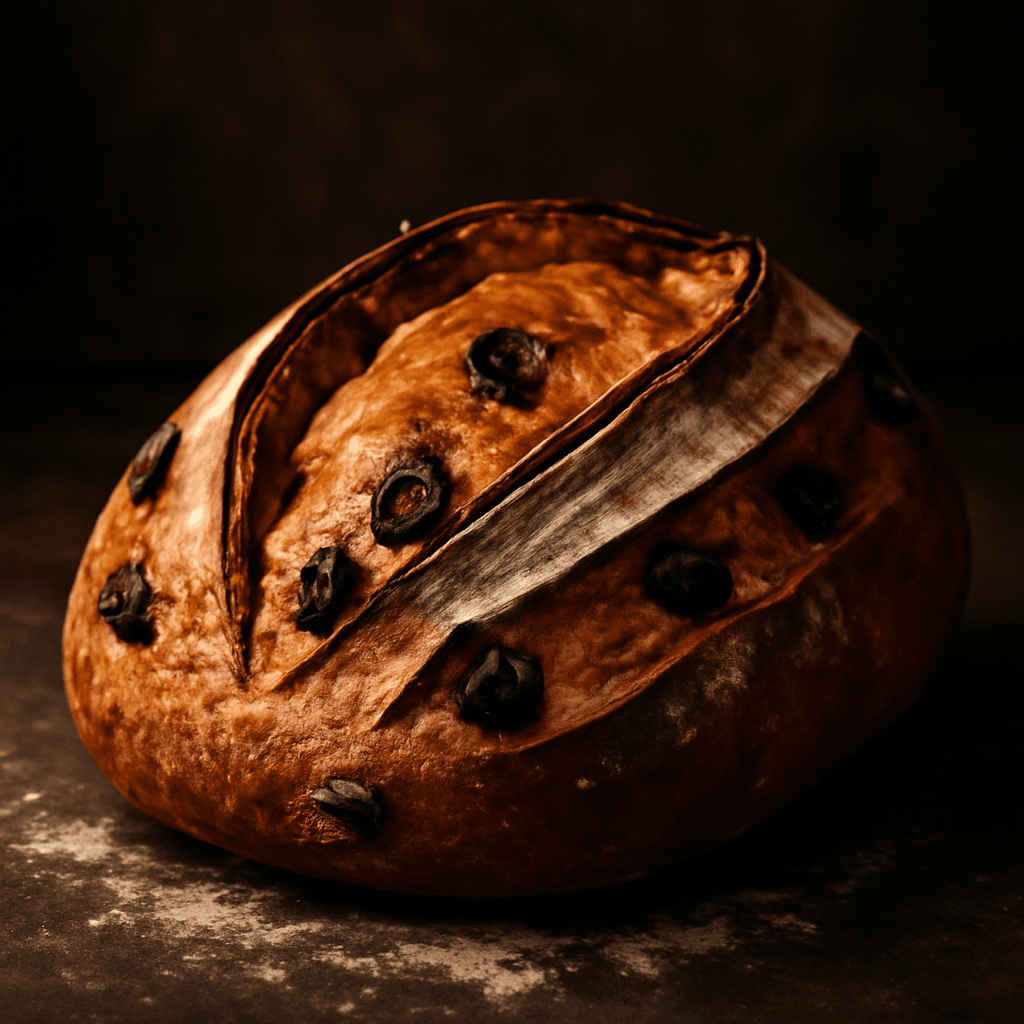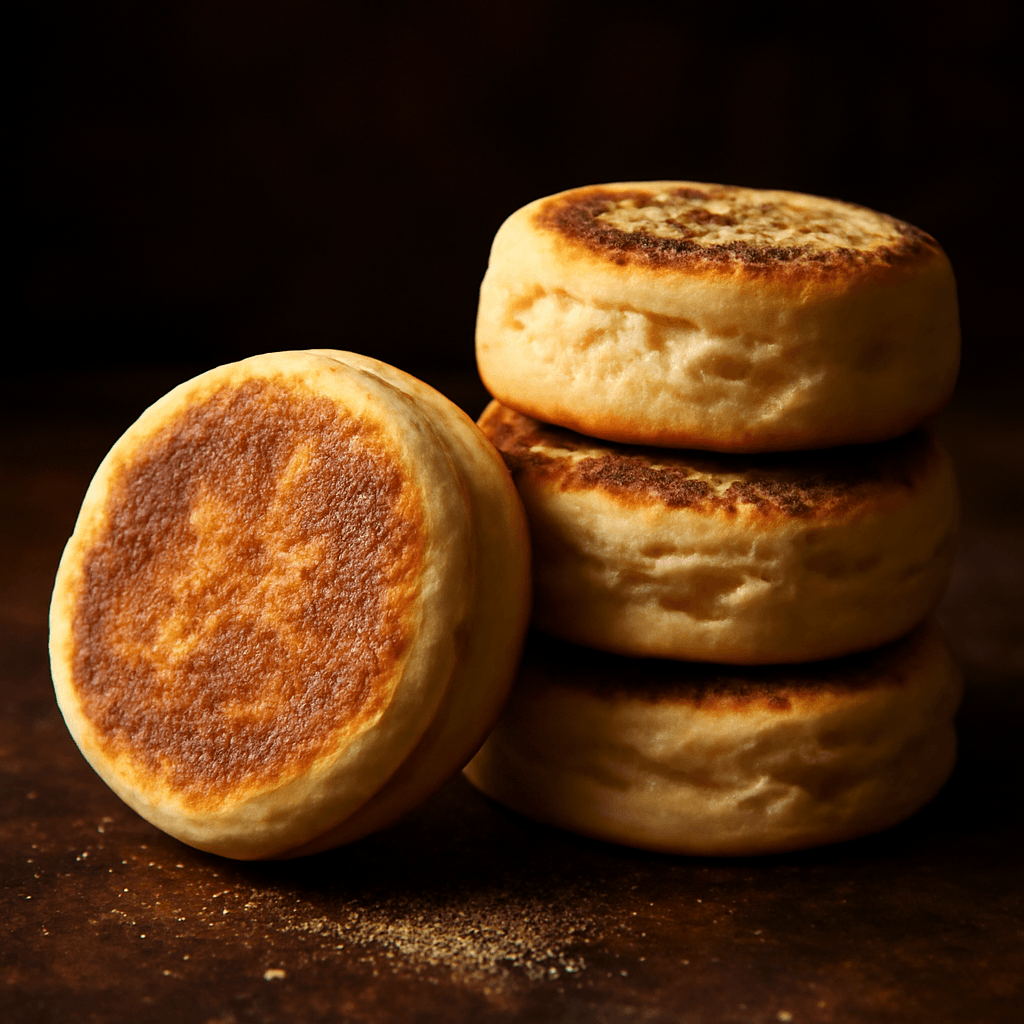
Sourdough English Muffins - freshly baked bread

Sourdough English Muffins

Sourdough

Tangy, nook-and-cranny-filled English muffins made with sourdough starter. Griddle-cooked for the perfect golden exterior.

Prep Time

20 min

Proof Time

10h

Bake Time

20 min

Servings

10

Calories

170

Ingredients

  • 500 g bread flour
  • 350 g water (warm)
  • 100 g active sourdough starter
  • 10 g fine sea salt

Instructions

  1. 1

    Autolyse

    Mix flour and water. Cover and rest 30–60 minutes.

  2. 2

    Add Starter & Salt

    Add active starter and salt. Mix using the pinch-and-fold method until incorporated.

  3. 3

    Bulk Ferment

    Over 4–5 hours, perform 4–6 stretch-and-folds spaced 30–45 minutes apart.

  4. 4

    Pre-Shape

    Turn onto a floured surface. Shape into a loose round and bench rest 20 minutes.

  5. 5

    Final Shape

    Shape into a tight boule. Place seam-side up in a floured banneton.

  6. 6

    Cold Proof

    Cover and refrigerate 8–16 hours.

  7. 7

    Score & Bake

    Preheat Dutch oven to 500°F. Score dough. Bake covered 20 min, then 450°F uncovered 20–25 min.

Baker's Notes

Your starter must be active and bubbly before you use it. Do the float test — if a spoonful floats in water, it's ready to leaven bread.

Baker Thomas Moreau

About This Recipe

These sourdough English muffins are a beautiful hybrid — they borrow the classic nooks-and-crannies structure of the traditional English muffin but elevate it with the deep, tangy flavour that comes from a slow sourdough fermentation. Baked in a hot Dutch oven rather than griddled, they develop a crisp, blistered crust that shatters when you tear them open, revealing a soft, airy interior studded with those iconic pockets.

Canadian home cooks love them because they deliver artisan bread quality at home without the intimidation of a full sourdough loaf. The long cold ferment does the heavy lifting for flavour, so you get maximum taste with minimal active effort — perfect for a weekend baking session that yields enough muffins for a whole week of breakfasts.

Tips for the Best Sourdough English Muffins

La fermentation froide est indispensable — c'est là que le goût acidulé du levain se développe vraiment et que le réseau de gluten se détend pour une meilleure expansion. Assurez-vous que votre levain passe le test de flottaison avant de l'ajouter, et résistez à l'envie de précipiter les étirements-et-pliages ; ces pliages construisent la force qui crée ces fameuses cavités.

What to Serve With It

Split and toast them well — they shine with butter and jam, but I also love them with smoked salmon, cream cheese, and a squeeze of lemon for a quick brunch. They hold up beautifully under a runny poached egg for Eggs Benedict, or simply with good salted butter and homemade strawberry preserves on a rainy Saturday morning.

Storage & Reheating

Store cooled muffins in an airtight container at room temperature for up to three days, or freeze them individually wrapped for up to three months. Reheat straight from frozen in a toaster or warm them in a 350°F oven for ten minutes — they re-crisp beautifully and come out tasting almost freshly baked.

Nutrition Facts

170

cal

4g

Protein

5g

Fat

34g

Carbs

3g

Fiber

329mg

Sodium

Frequently Asked Questions

Can I skip the cold ferment?+

You can, but you will lose the tangy flavour and the crannies won't be as pronounced. The long cold proof is the secret to both texture and taste in these muffins.

How do I know when they are done baking?+

They should be deeply golden brown and sound hollow when tapped on the bottom. An instant-read thermometer should read around 200°F in the centre.

Do I need a very active starter?+

Yes — your starter should be bubbly and have roughly doubled in size after feeding. The float test is your best indicator: a spoonful dropped in water should sink slowly rather than float immediately.

Can I bake these without a Dutch oven?+

A baking stone or steel works well, though you will need to create steam with a pan of hot water on the bottom rack. A heavy lidded pot is still the easiest way to get that professional crust.

What mix-ins work best?+

Add-ins like chopped olives, toasted nuts, or dried fruit fold in nicely during the last stretch-and-fold. Keep additions to about 10% of the flour weight so the dough still rises properly.

Tips & Tricks

  • Your starter must be active and bubbly — do the float test.
  • The cold proof is where the tangy flavour develops — don't skip it.
  • Steam from the Dutch oven is essential for a crispy, blistered crust.

Reviews (5)

Lisa P.★★★★★

Made this for a dinner party and everyone wanted the recipe. The bread was the star of the table — warm, crusty, and absolutely delicious.

Robert B.★★★★★

Five stars! The crust was perfectly crispy and the crumb was soft and airy. I'll never buy store-bought bread again.

Jennifer K.★★★★★

This is now our go-to bread recipe. The house smelled incredible while it was baking. My kids couldn't wait to tear into a warm slice.

André G.★★★★★

Just like from the bakery! The crust is crispy and the crumb is soft. Bravo for this extraordinary recipe.

Chantal D.★★★★★

Easy to prepare and so delicious! Even my picky kids went for seconds. This bread has become a staple in our home.