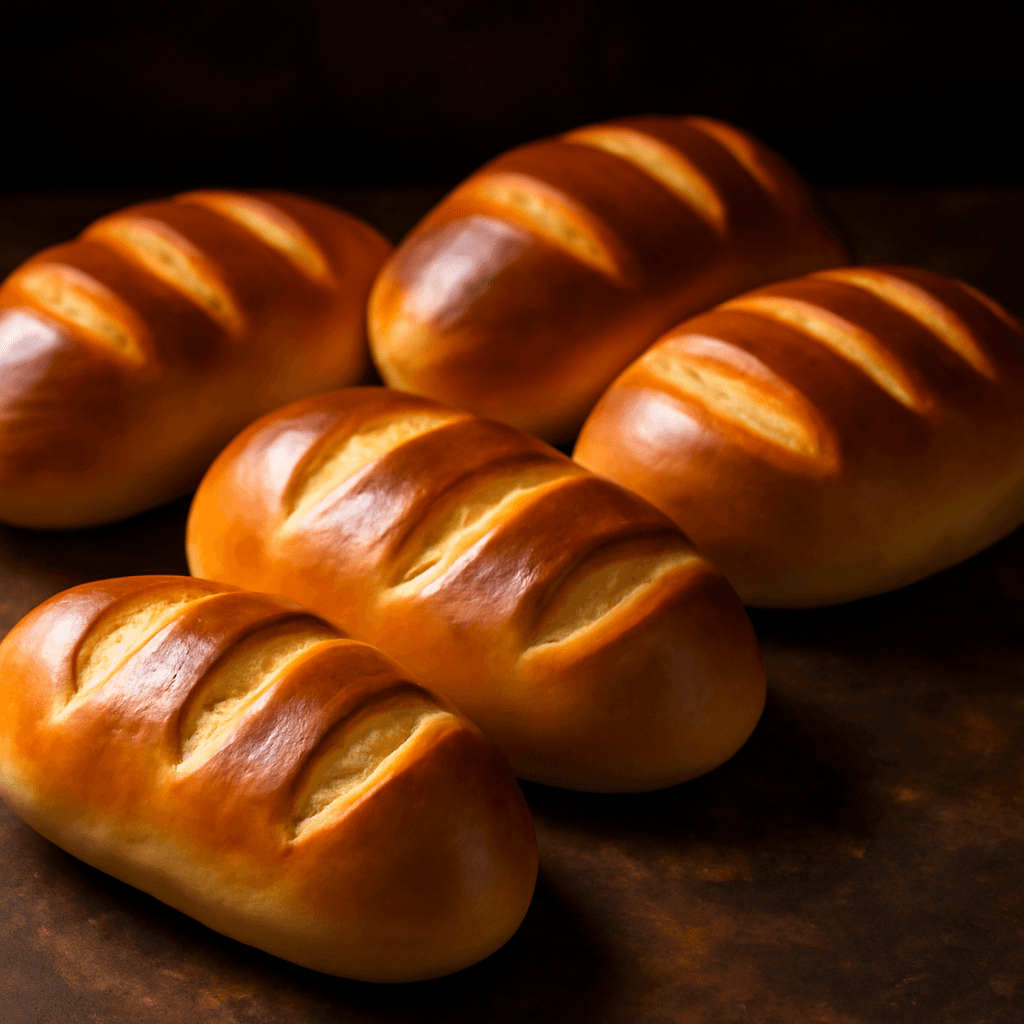
Pain au Lait (French Milk Rolls) - freshly baked bread

Pain au Lait (French Milk Rolls)

French & European-Style Bread

Soft, slightly sweet French milk rolls — the everyday bread of French bakeries. Simple, pure, and perfect.

Prep Time

15 min

Proof Time

1h 20m

Bake Time

15 min

Servings

10

Calories

180

Ingredients

  • 3 cups bread flour
  • 2¼ tsp active dry yeast
  • 1 cup warm water
  • 2 tbsp unsalted butter, softened
  • 2 tbsp sugar
  • 1½ tsp salt
  • 2 large eggs

Instructions

  1. 1

    Activate Yeast

    Dissolve sugar in warm water. Add yeast and wait 5 minutes.

  2. 2

    Mix Dough

    Add butter, eggs, salt, and flour. Knead 10 minutes until smooth.

  3. 3

    Rise

    Cover and rise 60–90 minutes until doubled.

  4. 4

    Shape

    Shape as directed — braid, round, or loaf.

  5. 5

    Second Rise

    Cover and rise 30 minutes.

  6. 6

    Bake

    Brush with egg wash. Bake at 375°F (190°C) for 25–30 minutes until golden.

Baker's Notes

European breads often benefit from a long, slow fermentation. Even an extra hour of rise time develops noticeably more flavour.

Baker Thomas Moreau

About This Recipe

Pain au lait is the roll you'll find stacked in every French bakery window, and once you bake a batch you'll understand why. The dough is enriched with butter and two whole eggs, so it bakes up soft, faintly sweet, and tender enough to pull apart with your fingers rather than tear with a knife. That golden egg-washed crust gives way to a pillowy crumb with just enough structure to hold jam without falling apart. Canadian home cooks love these because they're unfussy, freezer-friendly, and dress up a Sunday breakfast or a school lunch box without demanding pastry-chef skills. They taste like a bakery treat but come together with basic pantry staples.

Tips for the Best Pain au Lait (French Milk Rolls)

Warm water around 40°C wakes the yeast without killing it, so test with your wrist before mixing. Knead the full 10 minutes; this dough needs real gluten development to trap the butter and eggs without turning dense. Two thin coats of egg wash, five minutes apart, give the deepest bakery-style shine.

What to Serve With It

Split these while still warm and spread with salted butter and maple syrup for a proudly Canadian breakfast, or use them for ham and Oka cheese sandwiches at a picnic. They're lovely alongside a bowl of café au lait, and small versions make a sweet addition to any brunch bread basket.

Storage & Reheating

Keep cooled rolls in an airtight bag at room temperature for up to 3 days; the buttery dough stays soft longer than a lean baguette would. Freeze for up to 2 months and thaw at room temperature. Refresh day-old rolls in a 150°C oven for 5 minutes to bring back that just-baked softness.
Nutrition Facts

180

cal

6g

Protein

5g

Fat

39g

Carbs

2g

Fiber

332mg

Sodium

Frequently Asked Questions

Why is my pain au lait dense instead of fluffy?+

This usually means under-kneading or old yeast. Knead the full 10 minutes for proper gluten development, and confirm your yeast foams during the 5-minute activation step before adding it to the flour.

Can I make the dough the night before?+

Yes. After the first knead, refrigerate the covered dough overnight instead of doing a room-temperature rise. Let it come to room temperature and finish rising before shaping the next morning.

Why do these rolls taste different from regular white bread rolls?+

The butter, sugar, and two eggs make this an enriched dough, giving pain au lait its slightly sweet flavour and tender, almost brioche-like crumb that plain sandwich rolls don't have.

Can I use all-purpose flour instead of bread flour?+

You can, but expect a softer, slightly less chewy roll since bread flour's higher protein content builds stronger gluten. All-purpose still works fine for a tender, homestyle result.

How do I know the rolls are fully baked?+

Look for a deep golden crust and an internal temperature of 88 to 90°C if you have a thermometer. Tapping the bottom should sound hollow, not doughy.

Tips & Tricks

  • Egg wash (1 egg + 1 tbsp water) gives European breads their golden sheen.
  • Many European breads improve in flavour after a day of resting.
  • Use bread flour for the best gluten development and structure.

Reviews (5)

Sarah M.★★★★★

So glad I found this recipe. The instructions are clear and the result is consistently great. I've made it four times already and it's perfect every time.

David C.★★★★★

Bakery-quality bread at home. I followed the recipe exactly and it turned out amazing. The proofing tips really helped.

Lisa P.★★★★★

Made this for a dinner party and everyone wanted the recipe. The bread was the star of the table — warm, crusty, and absolutely delicious.

Robert B.★★★★★

Five stars! The crust was perfectly crispy and the crumb was soft and airy. I'll never buy store-bought bread again.

Jennifer K.★★★★★

This is now our go-to bread recipe. The house smelled incredible while it was baking. My kids couldn't wait to tear into a warm slice.