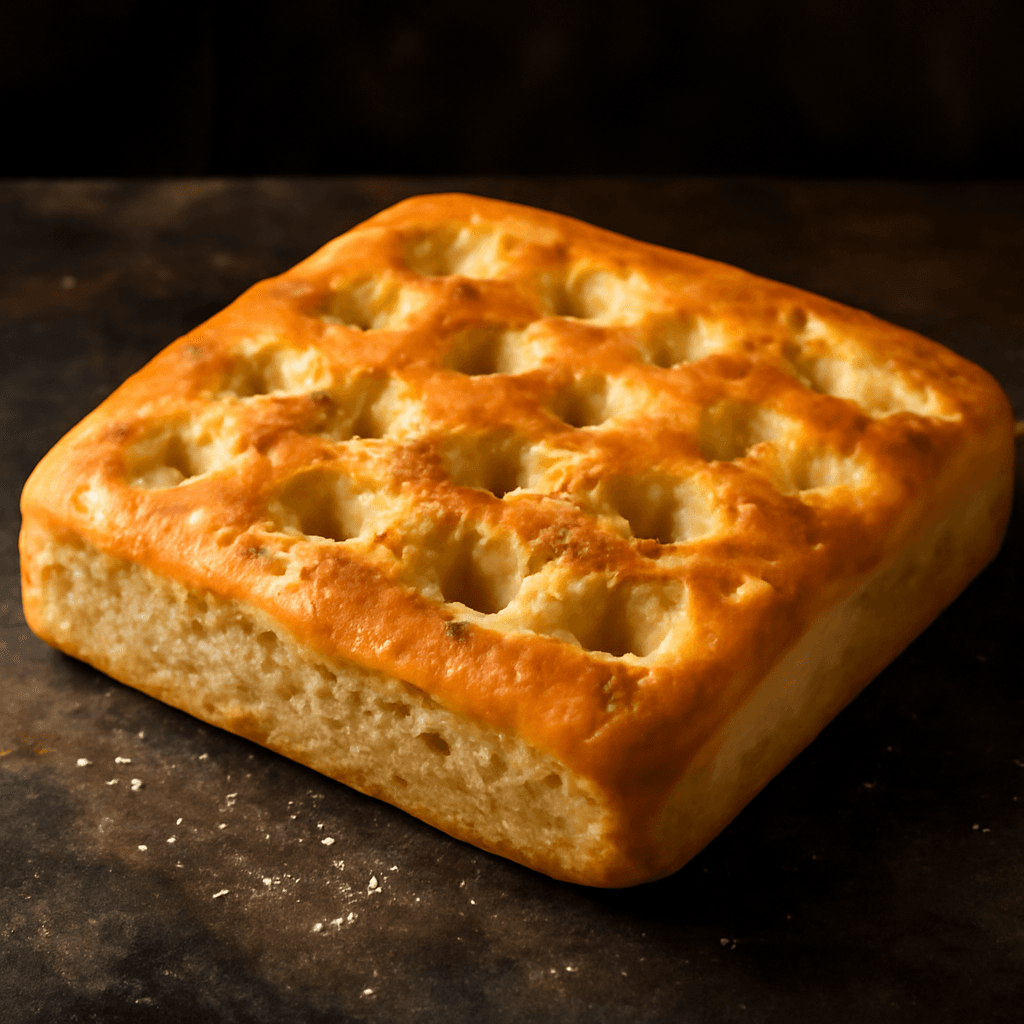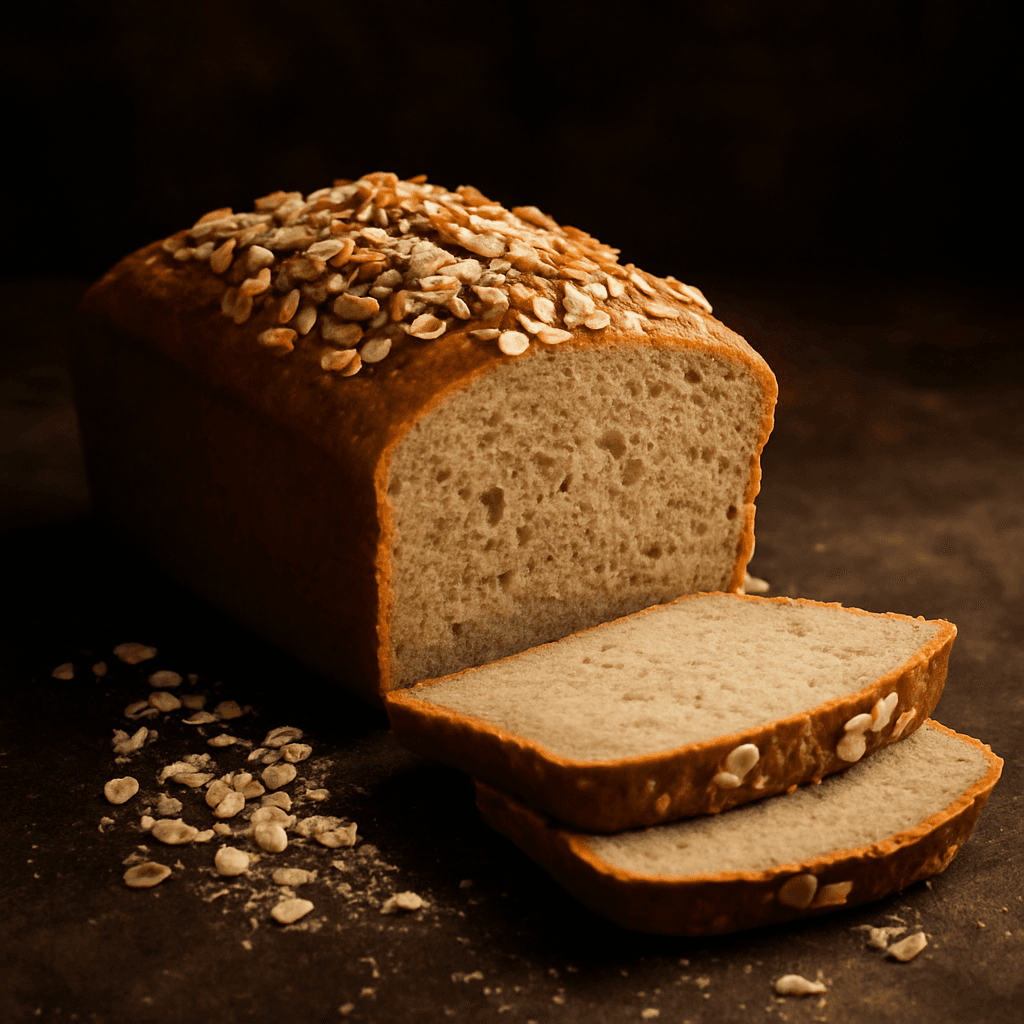
Oat Flour Bread (Gluten-Free) - freshly baked bread

Oat Flour Bread (Gluten-Free)

Gluten-Free Bread

Simple bread made with certified gluten-free oat flour — naturally mild, slightly sweet, and incredibly easy.

Prep Time

10 min

Bake Time

45 min

Servings

10

Calories

175

Ingredients

  • 1½ cups rice flour blend
  • ½ cup tapioca starch
  • ¼ cup potato starch
  • 2¼ tsp instant yeast
  • 1 tsp xanthan gum
  • 1 cup warm milk
  • 2 tbsp honey
  • 2 tbsp olive oil
  • 1 tsp salt
  • 2 large eggs

Instructions

  1. 1

    Mix Dry

    Combine rice flour, tapioca starch, potato starch, xanthan gum, yeast, and salt.

  2. 2

    Mix Wet

    Whisk warm milk, oil, honey, and eggs.

  3. 3

    Combine

    Add wet to dry and mix 3–4 minutes until a thick, sticky batter forms.

  4. 4

    Rise

    Pour into a greased pan. Cover and rise 30–45 minutes until nearly doubled.

  5. 5

    Bake

    Bake at 375°F (190°C) for 35–40 minutes until golden and internal temp reaches 200°F.

Baker's Notes

Gluten-free bread dough is more like a thick batter than a traditional dough — that's completely normal. Don't keep adding flour trying to make it behave like wheat dough.

Baker Thomas Moreau

About This Recipe

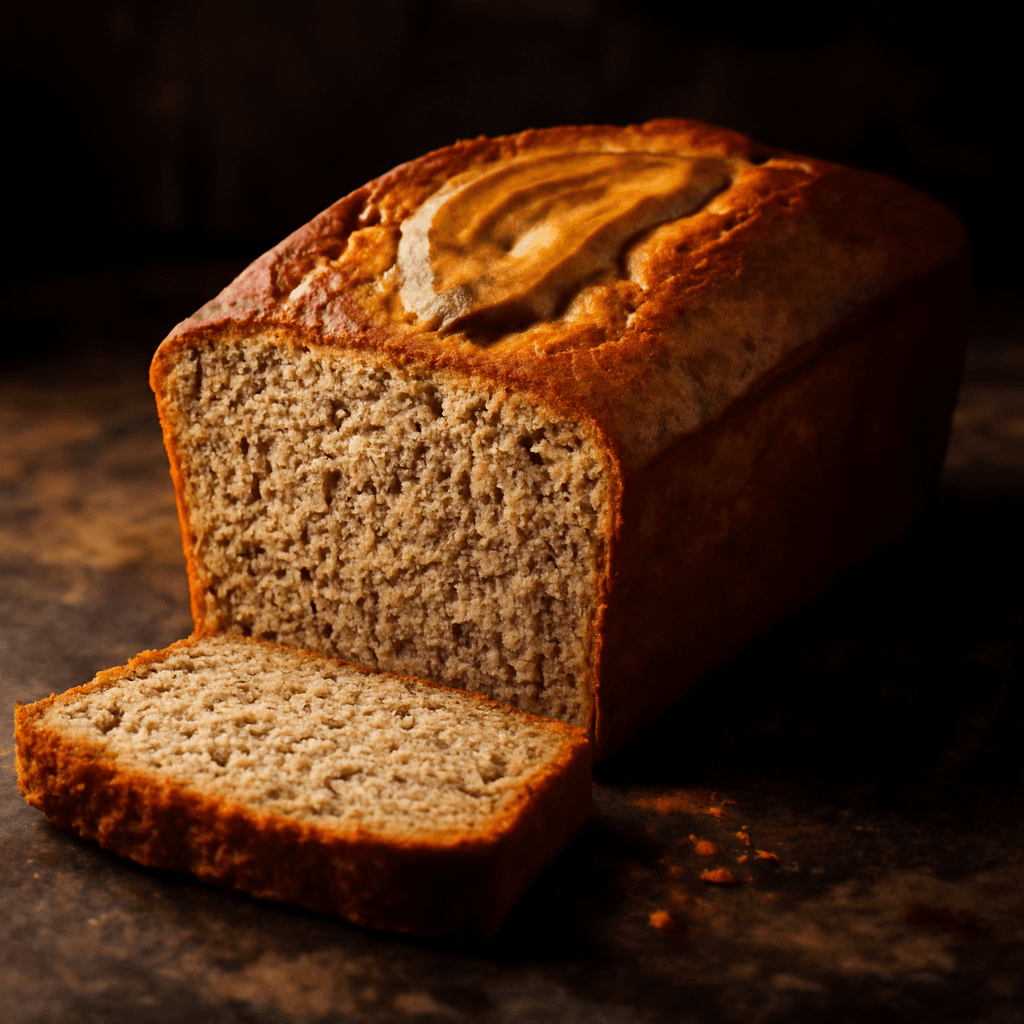
This oat flour bread is one of those quiet heroes in the gluten-free world — not flashy, but deeply comforting. The oat flour lends a gentle sweetness and a soft, almost cake-like crumb, while the rice flour blend and tapioca starch give it just enough structure to hold together. A touch of honey rounds out the flavour, and a drizzle of olive oil keeps every bite tender.

Canadian home cooks gravitate toward this recipe because it strips away the intimidation factor of gluten-free baking. There's no kneading, no fuss — just whisk the wet, fold it into the dry, and let the oven do the rest. The result is a loaf that's genuinely satisfying on its own, or even better when toasted with a generous smear of butter.

Tips for the Best Oat Flour Bread (Gluten-Free)

Assurez-vous que votre lait soit tiède, vers 105-110°F : trop chaud et vous tuerez la levure, trop froid et elle ne démarrera pas. La pâte sera épaisse et collante, plus proche d'un mélange à gâteau dense que d'une pâte à pain traditionnelle, alors résistez à l'envie d'ajouter plus de farine. Et grillez-le ; le pain sans gluten prend vraiment vie sous le grille-pain ou dans une poêle chaude avec du beurre.

What to Serve With It

This loaf shines alongside a steaming bowl of Manitoba split pea soup or a hearty beef and barley stew. Butter it generously for breakfast with jam or peanut butter, or slice it thin for sandwiches with smoked salmon and cream cheese. It also holds up beautifully as a toast base for avocado and a fried egg.

Storage & Reheating

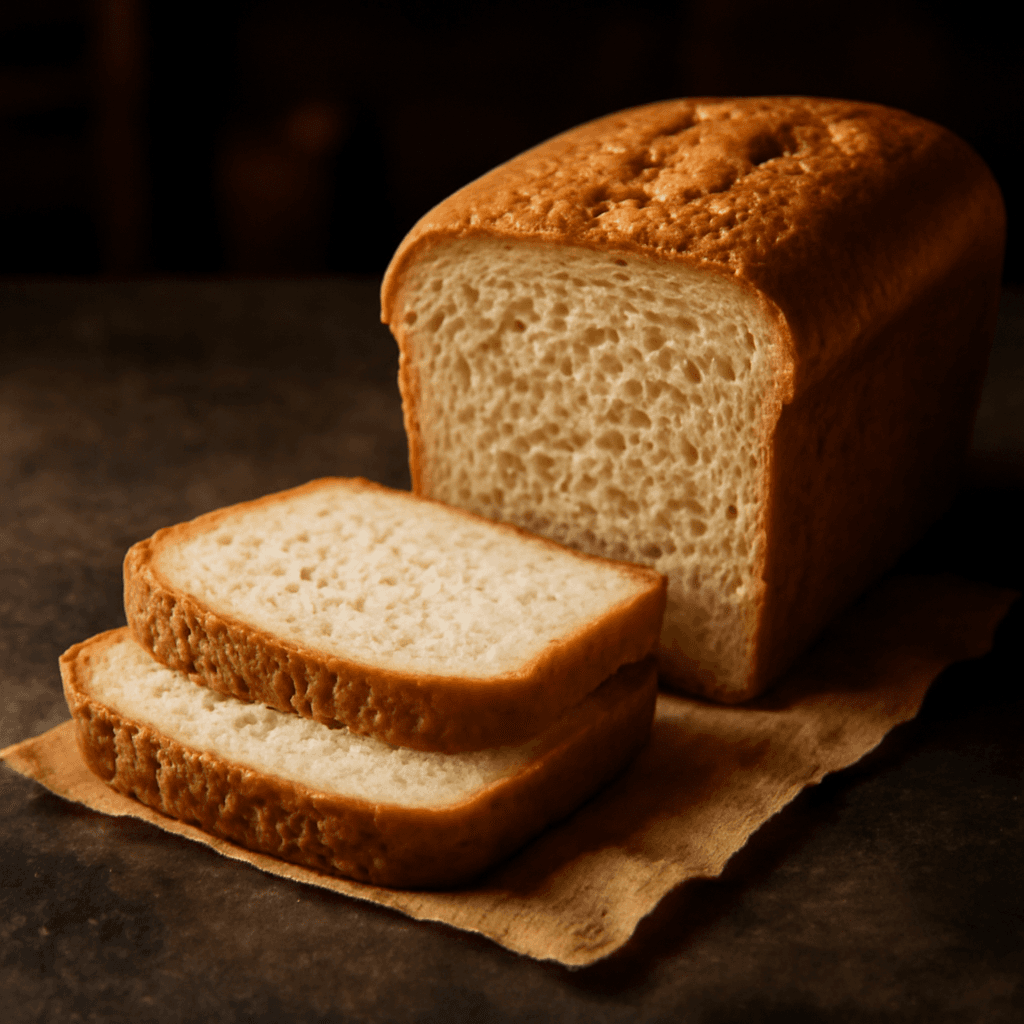
Let the loaf cool completely before wrapping it tightly in plastic wrap or aluminium foil. It keeps at room temperature for two days, but refrigeration extends life to four days — though the crumb will firm up. For longer storage, slice and freeze in a freezer bag for up to three months. Reheat straight from frozen in a toaster or at 350°F for ten minutes.
Nutrition Facts

175

cal

5g

Protein

3g

Fat

27g

Carbs

4g

Fiber

303mg

Sodium

Frequently Asked Questions

Can I substitute all-purpose flour for the rice flour blend?+

No. All-purpose flour contains gluten, which defeats the purpose of a gluten-free loaf. Stick with the rice flour blend for proper structure.

How do I know when the bread is fully baked?+

Look for a deep golden crust and an internal temperature of 200°F on an instant-read thermometer. A toothpick inserted in the centre should come out clean.

Does this bread freeze well?+

Yes. Slice it first, then wrap portions in plastic wrap and place them in a freezer-safe bag. Thaw at room temperature or toast directly from frozen.

Can I use active dry yeast instead of instant yeast?+

Absolutely. Dissolve the active dry yeast in the warm milk along with the honey, then proceed with the recipe as written.

Why doesn't this bread have a chewy crust like regular bread?+

Without gluten, the crumb stays softer and the crust stays tender. That's normal and part of what makes GF bread unique. Toasting brings out the best texture.

Tips & Tricks

  • Xanthan gum replaces the binding role of gluten — don't skip it.
  • GF bread dough is more like a thick batter than a traditional dough — that's normal.
  • Toast GF bread for the best texture and flavour.

Reviews (3)

Chantal D.★★★★★

Easy to prepare and so delicious! Even my picky kids went for seconds. This bread has become a staple in our home.

Pierre T.★★★★★

Excellent recipe. I followed the instructions to the letter and the result was perfect. My wife loved it. The best homemade bread I've made.

Marie L.★★★★★

Made this last weekend and my family loved it! The bread came out perfectly golden with a beautiful crust. Will definitely be making this again.