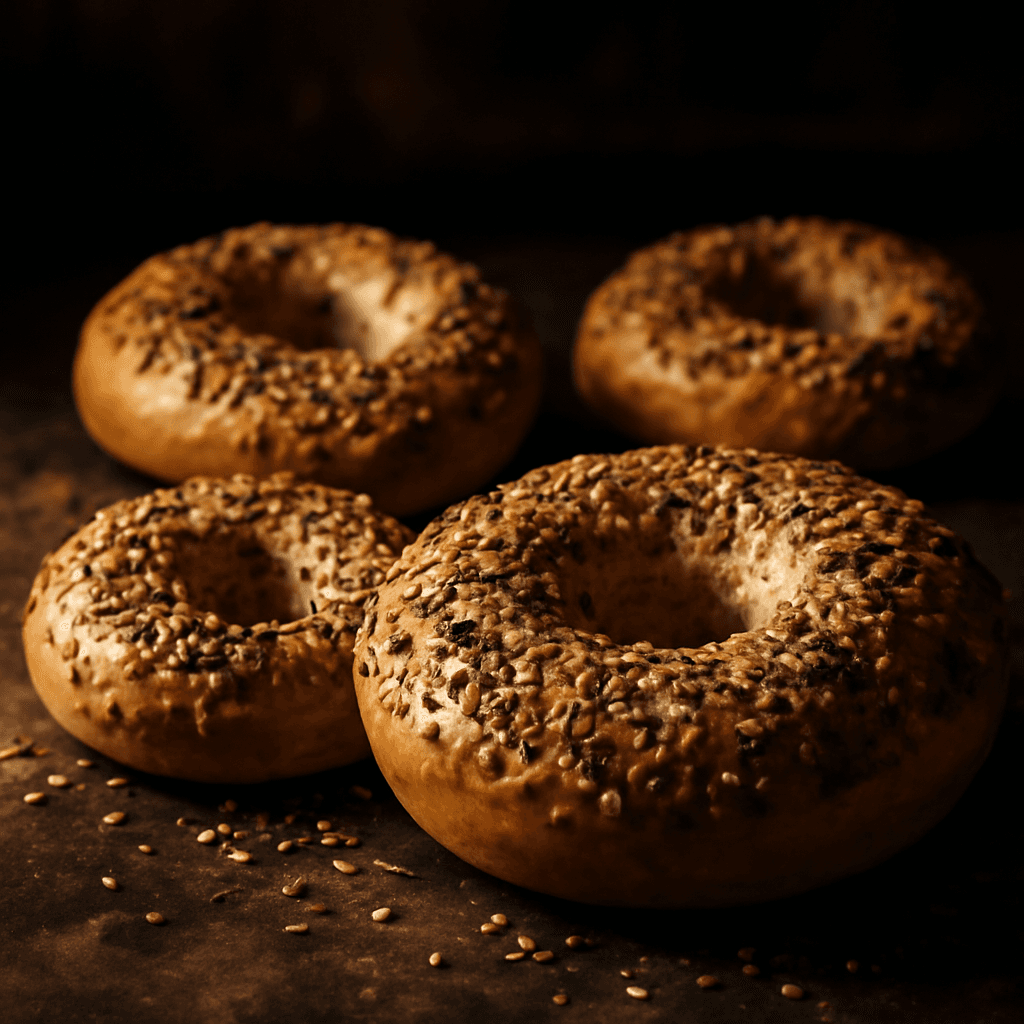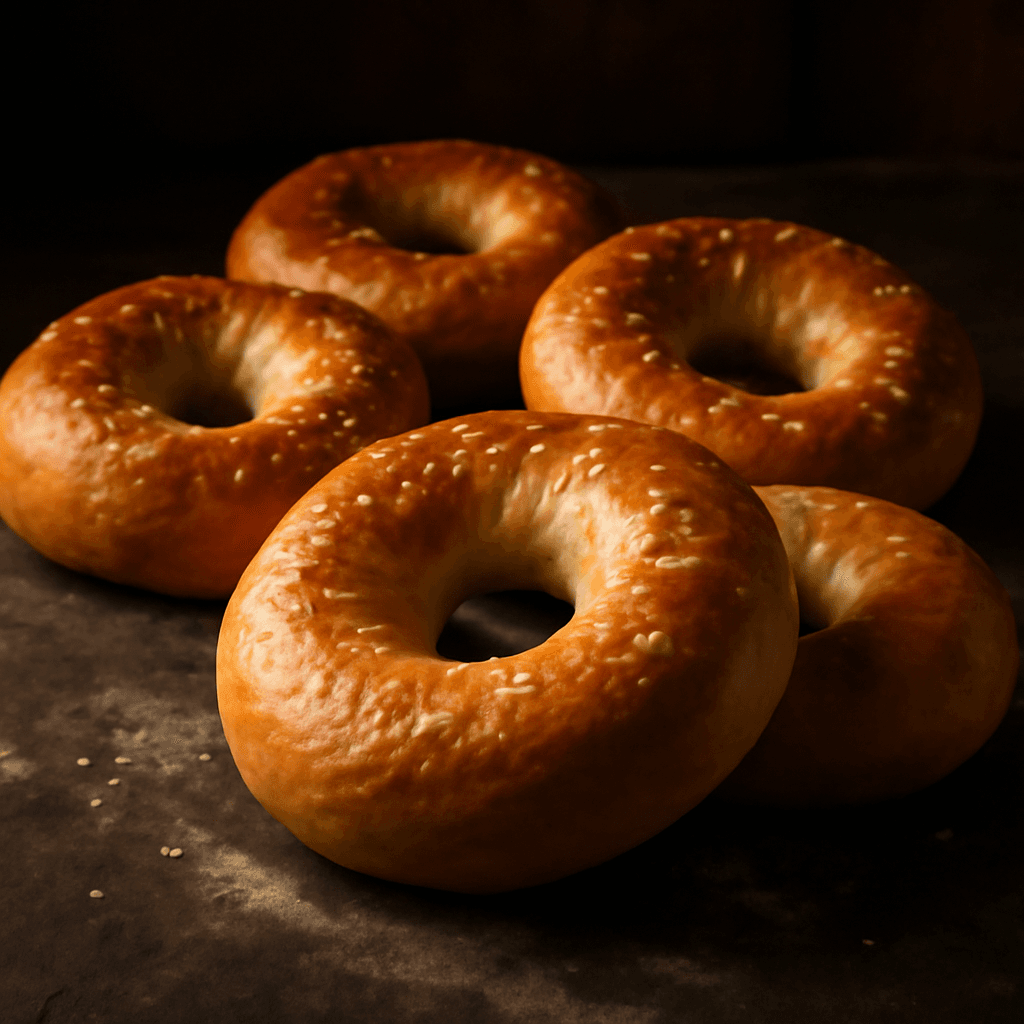
Classic Homemade Bagels - freshly baked bread

Classic Homemade Bagels

Bagels & Pretzels

Chewy, golden bagels with a crackly crust — boiled then baked for authentic deli-style texture.

Prep Time

25 min

Proof Time

1h

Bake Time

20 min

Servings

10

Calories

245

Ingredients

  • 4 cups bread flour
  • 2¼ tsp instant yeast
  • 1⅓ cups warm water
  • 2 tbsp malt syrup or honey
  • 1½ tsp salt

Instructions

  1. 1

    Mix & Knead

    Combine flour, yeast, malt syrup, salt, and water. Knead 10 minutes until firm and smooth.

  2. 2

    Rise

    Cover and rise 45–60 minutes until puffy.

  3. 3

    Shape

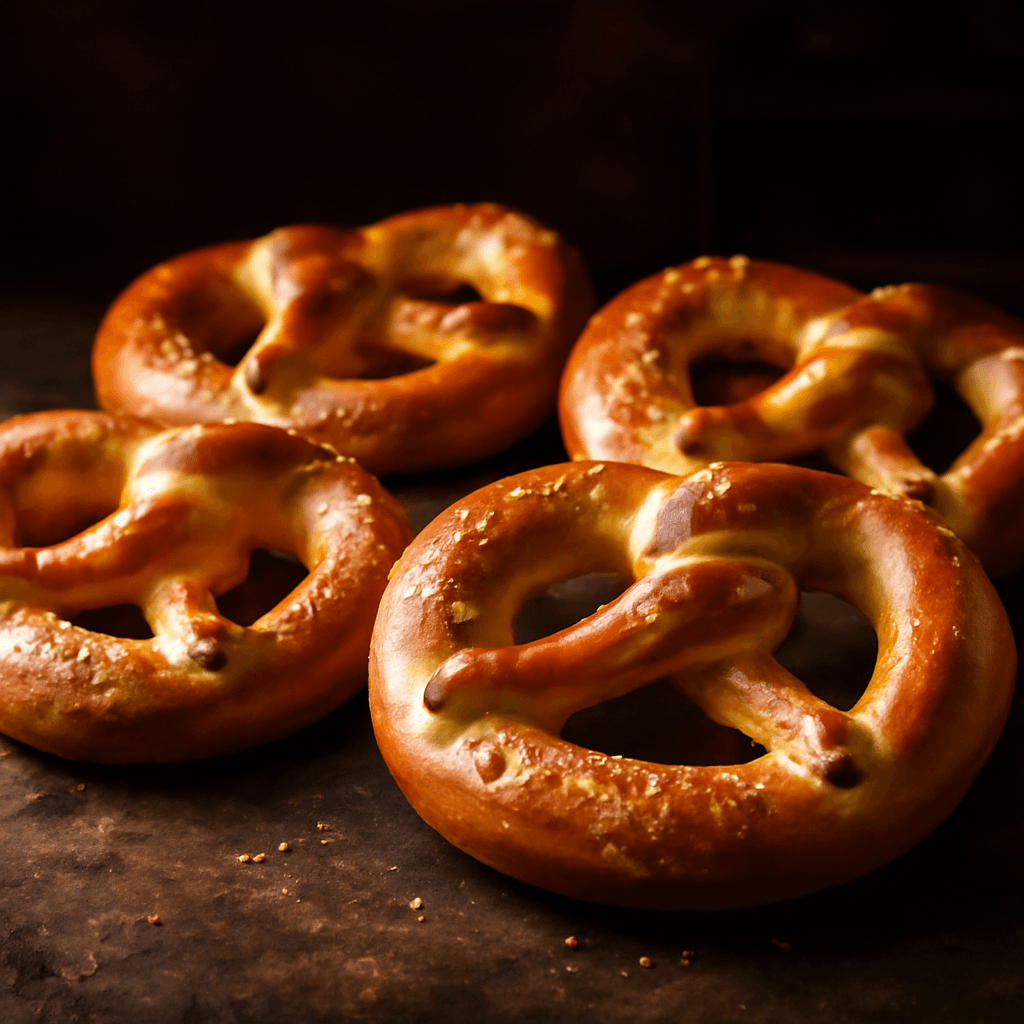
    Divide into equal pieces and shape into rings or pretzel shapes.

  4. 4

    Boil/Dip

    Boil in malt water or dip in a baking soda bath as directed.

  5. 5

    Top & Bake

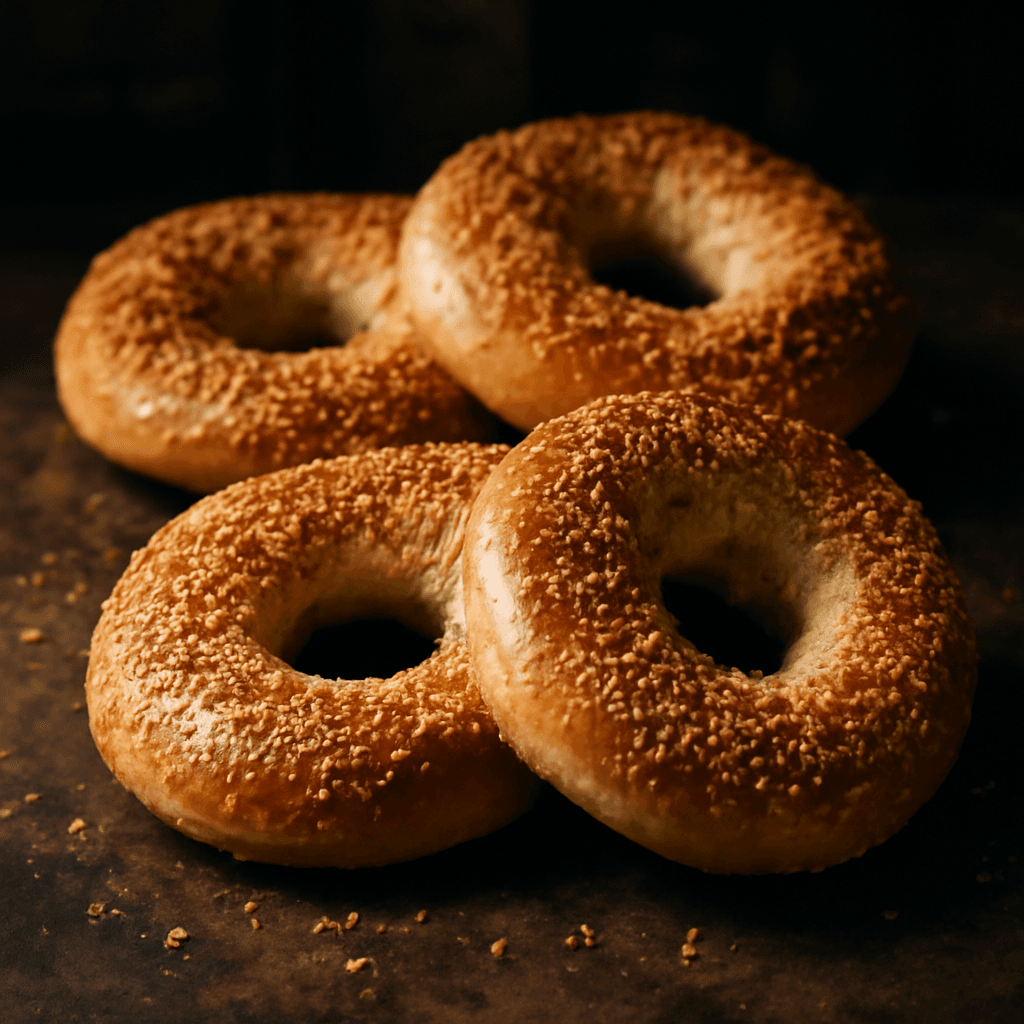
    Add toppings. Bake at 425°F (220°C) for 18–20 minutes until deep golden.

Baker's Notes

The boil is what makes a bagel a bagel. Skipping it gives you a roll, not a bagel. The malt syrup in the boiling water adds colour and subtle sweetness.

Baker Thomas Moreau

About This Recipe

There is something deeply satisfying about pulling a fresh bagel from your oven — that crackly crust shattering under your knife, giving way to a dense, chewy interior that tastes like a proper Montreal bakery. What sets these apart from ordinary bread is the boil before baking, which gelatinizes the surface and creates that unmistakable deli-style chew. The malt syrup in the dough adds a subtle sweetness that balances the richness of whatever topping you choose.

Canadian home cooks have been making these since the late nineteenth century, when Jewish immigrants brought the technique from Eastern Europe to Montreal's Saint-Laurent Boulevard. A good homemade bagel rewards patience: stiff dough, a quick boil, and a hot oven are all you really need. The result is worth every minute of the hour-long rise.

Tips for the Best Classic Homemade Bagels

Keep your dough firmer than you would for regular bread — a stiff dough is essential for that dense, chewy crumb. Don't skip the boil; thirty seconds per side in simmering malt water is what creates the signature crust. If you don't have malt syrup, honey works fine, though the flavour will be slightly different.

What to Serve With It

These bagels shine simple — just a generous smear of cream cheese and a slice of smoked salmon, the classic Montreal combination. For breakfast, try them toasted with butter and jam, or sliced and layered with lox, capers, red onion, and dill. They also hold up beautifully to a hot smoked meat sandwich from a local delicatessen, or as the base for a hearty eggs benedict.

Storage & Reheating

Bagels are best enjoyed the same day they are baked. If you must store them, wrap cooled bagels tightly in plastic wrap and freeze them within twelve hours — they keep well for up to three months. Thaw overnight in the refrigerator, then reheat in a 375°F (190°C) oven for five minutes, or slice and toast directly from frozen. They will never quite match the freshness of the day they were made.
Nutrition Facts

245

cal

8g

Protein

3g

Fat

37g

Carbs

3g

Fiber

282mg

Sodium

Frequently Asked Questions

Why does my dough feel too stiff to knead?+

That is exactly right. Bagel dough should be noticeably firmer than standard bread dough. If it feels impossible to work, add water one tablespoon at a time — you want a tight, cohesive ball that holds its shape.

Can I use active dry yeast instead of instant?+

Yes, but dissolve it in the warm water first and let it sit for five minutes until foamy before adding the flour. Active dry yeast has larger granules that need activation, while instant yeast blends directly into the dry ingredients.

What is the difference between boiling in malt water versus a baking soda bath?+

Malt water gives you a slightly sweeter, more traditional bagel flavour with a glossy finish. A baking soda bath produces a darker, more pretzel-like crust with less sweetness. Both work — malt is closer to the Montreal style.

How do I get those big air bubbles on top of bagels?+

Those come from the yeast during the boil, not from proofing. Make sure your water is at a rolling boil when you drop the bagels in, and don't overcrowd the pot. Each bagel needs room to move freely.

My bagels came out pale — what went wrong?+

They likely need a longer bake or higher heat. Check your oven temperature with a thermometer, as many ovens run cooler than dialled. Bake until the bottoms are a deep golden brown, not just lightly coloured on top.

Tips & Tricks

  • The boil/dip step is what gives bagels and pretzels their distinctive chewiness.
  • These are best eaten the same day — toast leftovers for best results.
  • Use a firm dough — bagel dough should be stiffer than regular bread dough.

Reviews (4)

Robert B.★★★★★

Five stars! The crust was perfectly crispy and the crumb was soft and airy. I'll never buy store-bought bread again.

Jennifer K.★★★★★

This is now our go-to bread recipe. The house smelled incredible while it was baking. My kids couldn't wait to tear into a warm slice.

André G.★★★★★

Just like from the bakery! The crust is crispy and the crumb is soft. Bravo for this extraordinary recipe.

Chantal D.★★★★★

Easy to prepare and so delicious! Even my picky kids went for seconds. This bread has become a staple in our home.