About This Recipe
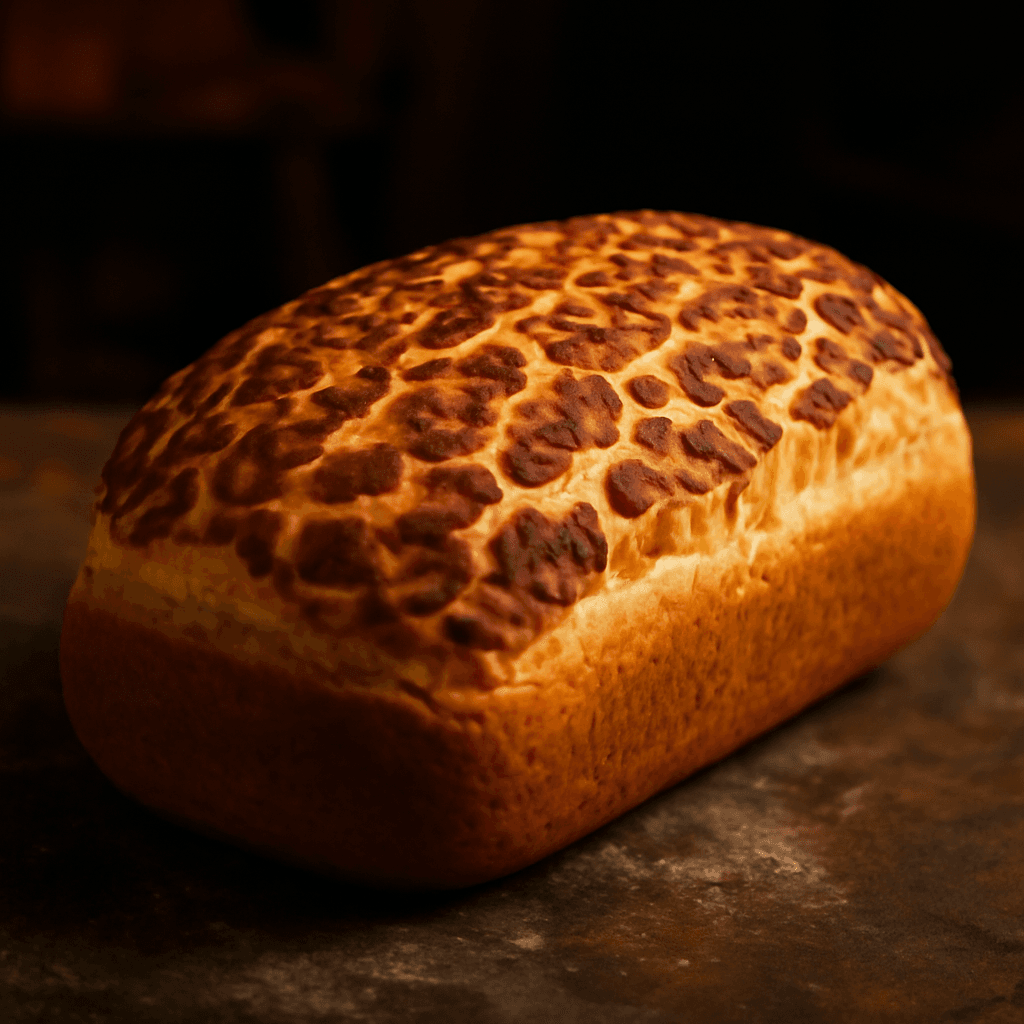
Dutch Crunch Bread, known in the Netherlands as Tijgerbrood, gets its name from the striking tiger-stripe pattern that forms on top when a rice flour paste dries and cracks during baking. The result is a bread with a satisfying crackle that gives way to a pillowy, airy crumb — a texture contrast that feels almost magical the first time you tear into it.
Canadian home bakers have embraced this bread because it rewards patience without demanding fancy equipment. The autolyse and stretch-and-fold method builds structure quietly, while the high-heat bake with steam delivers a deep golden crust that keeps you coming back for more.
Tips for the Best Dutch Crunch Bread (Tijgerbrood)
Start with the autolyse — mixing just flour and water and letting it sit for twenty minutes before adding yeast and salt — to give the gluten network a head start. Keep the oven hot at 475°F (245°C) and trap steam in the first ten minutes of baking; that moisture is what makes the rice flour paste shatter into those signature stripes.
What to Serve With It
Slice thick and serve with good butter and jam for breakfast, or pair with a bowl of poutine or smoked meat sandwiches for lunch. The sturdy crust holds up beautifully to burger buns, and the soft interior makes it ideal for soaking up gravy or stew.
Storage & Reheating
Store at room temperature in a bread box or paper bag for up to two days — the crackly crust won't last much longer. For longer storage, slice and freeze; toast frozen slices directly in a 400°F (200°C) oven for five minutes to restore the crunch.